Sports flooring is an integral part of any type of physical activity. Basketball, running, tennis and other athletics require a flooring that promotes comfort while preventing injury. Here’s an in-depth look at how the best sports flooring impacts young athletes in a school environment.
Key Takeaways
The best sports flooring depends on how the facility is used. Basketball, volleyball, indoor track, weight rooms, PE programs, and multipurpose spaces have different flooring requirements.
Athlete safety and performance should come first. Shock absorption, traction, vertical deformation, area deflection, and ball rebound can directly affect comfort and playability.
Hardwood and synthetic flooring serve different needs. Maple hardwood is a popular choice for competitive basketball and volleyball, while synthetic systems provide versatility for multipurpose athletic spaces.
Durability and maintenance affect long-term value. Facility managers should consider lifecycle costs, maintenance requirements, repairs, refinishing, and expected service life—not just the initial installation price.
Multipurpose use matters. School gyms often accommodate athletics, PE classes, tournaments, assemblies, and community events, making flooring versatility an important consideration.
Sports flooring can strengthen school branding. Custom logos, school colors, court graphics, and multi-sport markings can enhance school pride and create an impressive environment for athletes, recruits, and spectators.
Early project planning helps minimize downtime. Coordinating installation with athletic seasons, school calendars, and facility events can help ensure the new floor is ready when students and teams need it.
An experienced sports flooring contractor can help evaluate the entire facility. Working with a specialist such as Kiefer USA helps schools compare flooring systems based on performance, usage, budget, maintenance, and long-term goals.
What are common features of the best sports flooring?
Shock Absorption
Firstly, it’s important to know what features make up the ideal sports flooring. Shock absorption is a benefit to athletes since it improves playability and comfort underfoot. A sports floor with optimum shock absorption helps protect the joints of athletes’ lower extremities.
Fatigue is reduced when athletes practice, compete, or otherwise play on sports floors with sufficient shock absorption. Poor shock absorption can result in sore knees and ankles. The level of shock absorption should be appropriate for the specific use of the sports flooring.
For example, a flooring on which basketball is played will have a specific level of shock absorption, while a sports floor on which aerobics are performed will have a different level. Playing basketball on a floor designed for aerobics leads to athletes experiencing fatigue much quicker and vice versa.
Traction
Traction is equally important in a school’s sports floor. The right amount of traction will enhance athletes’ peak performance and reduce slips, falls, and subsequent injuries. Here, too, the sports flooring should be designed with the sport in mind in order to deliver the ideal level of traction.
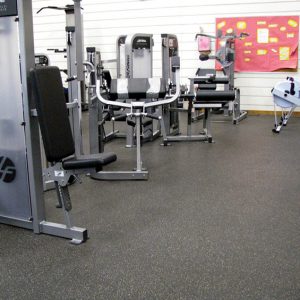
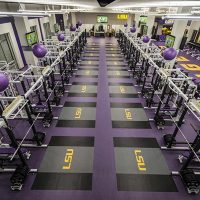
Consider that recycled rubber floors offer a different level of traction than maple or synthetic sports flooring. Rubber floors are ideal for use in weight rooms. On the other hand, maple or synthetic floors are suitable for school sports, like basketball and volleyball.
Vertical Deformation
Vertical deformation (the amount and impact of an athlete’s downward movement on a floor) is important for certain sports, like basketball, volleyball, and dance. Vertical deformation (aka vertical deflection) promotes foot stability. Excessive vertical deformation can make the floor feel unstable to an athlete.
Area Deflection
Area deflection, which measures how energy is dispersed throughout a floor system, is also key in sports flooring. This feature calculates how well a floor contains the deflected area under the athlete’s impact. Hardwood courts built with a subfloor system generally provide a larger area of deflection.
Ball Rebound
A basketball bounces differently on a sports floor system than a concrete one. Ball rebound measures this difference. A soft floor, for instance, will yield a low vertical ball rebound. A basketball court will ideally provide a ball rebound measurement of at least 93 percent.
What flooring products provide these features?
Hardwood sports flooring systems are used for basketball, volleyball, and dance. Connor products, like its fixed and floating subfloor systems, are well-suited for school environments. Performance testing involving the abovementioned five key features results in rankings in the top tiers.
Connor sports flooring products, including its Connor Maple Flooring and Connor Portable Systems, rate highly for shock absorption, vertical deflection, area deflection, and ball rebound. Well-reputed in the sports flooring market, these products are found in high schools and sports complexes.
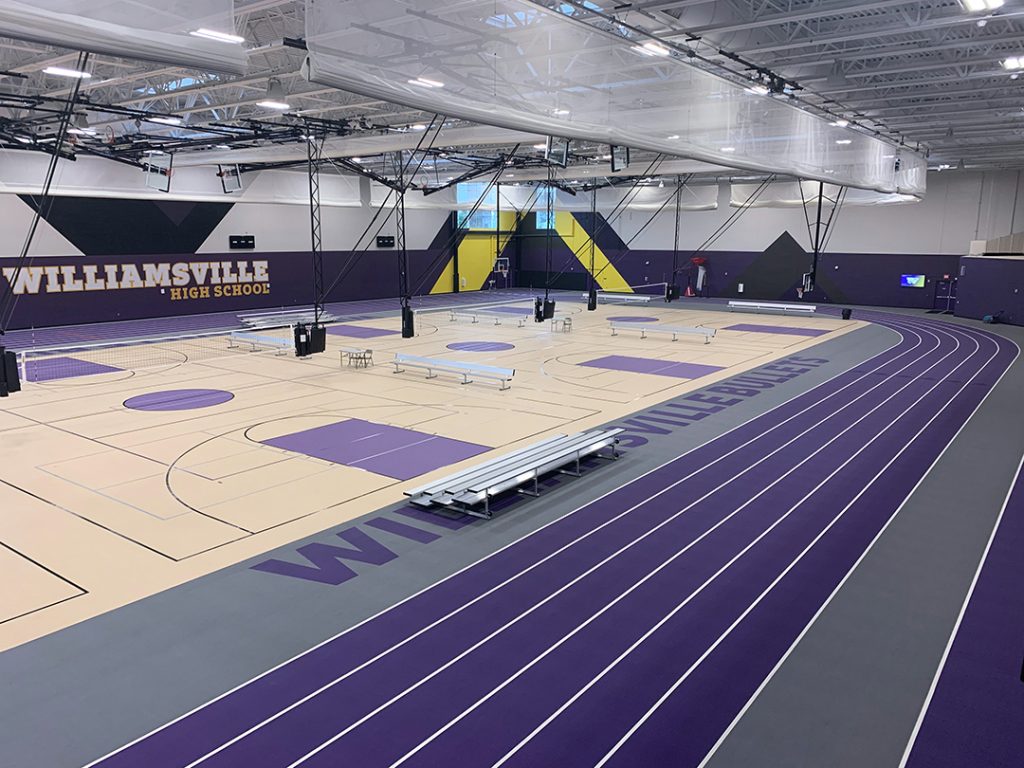
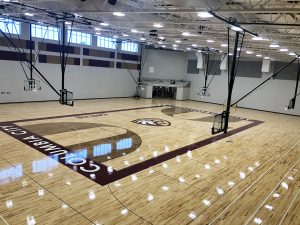
The best sports flooring for schools encourages pride via bright school colors and logos emblazoned across the centers. Facility mangers have the option to design custom floors painted with the school’s logo, encouraging student athletes’ school pride when competing and practicing.
Rubber is also ideal as school sports flooring when it is designed for a particular use. Schools are demanding settings, requiring floors that can withstand continual foot traffic, distracting noise, and high maintenance needs. Mondo Educational Flooring meets these rigorous demands.
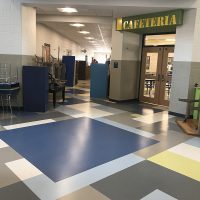
Rubber floors offer slip resistant properties, which help keep young students safe. Rubber floors absorb sound, including the noisy chatter in hallways and cafeterias. A quiet educational space contributes to better communication between teachers and students and enhances learning.
Teachers and students who are on their feet for hours during school days experience greater comfort with rubber floors. Featuring an elastic construction, rubber floors offer maximum underfoot cushioning. Rubber floors from KieferUSA are also easy and cost-effective to maintain.
How do you choose the best sports flooring for a school?
Choosing the best sports flooring requires more than comparing surface materials. Athletic directors and facility managers should consider how the space will be used, which sports it needs to accommodate, expected traffic, maintenance requirements, available budget, and long-term performance.
Before selecting a flooring system, consider:
Primary sports: Basketball, volleyball, indoor track, strength training, physical education, and other activities have different performance requirements.
Multipurpose use: Determine whether the gym will also host assemblies, graduations, tournaments, camps, or community events.
Athlete safety: Evaluate shock absorption, traction, vertical deformation, and other performance characteristics.
Durability: Consider daily traffic from athletes, students, staff, spectators, and equipment.
Maintenance: Compare routine cleaning, refinishing, repair, and long-term maintenance requirements.
Installation schedule: Plan the project around athletic seasons, summer breaks, tournaments, and other school events.
Lifecycle costs: Look beyond the initial installation price and consider maintenance, repairs, refinishing, and expected service life.
Evaluating these factors together helps schools choose a sports floor that supports athletes while making the most of the facility budget.
What is the best flooring for a multipurpose school gym?
Many school gymnasiums serve far more than one athletic program. A single facility may host basketball in the evening, physical education during the school day, volleyball tournaments on weekends, and assemblies or special events throughout the year.
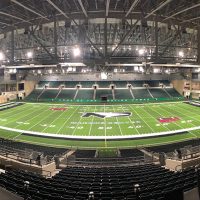
For these spaces, facility managers should prioritize a flooring system that balances athletic performance with durability and versatility. Maple hardwood is a popular choice for competition basketball and volleyball courts, while synthetic sports flooring can be an excellent solution for multipurpose gymnasiums, fieldhouses, and recreational spaces.
There is no single flooring system that is best for every school. The ideal solution depends on the sports being played, frequency of non-athletic events, expected traffic, performance requirements, maintenance resources, and available budget.
Should schools choose hardwood or synthetic sports flooring?
Both hardwood and synthetic sports flooring can provide excellent performance when they are selected for the right application.
Hardwood sports flooring is widely associated with competitive basketball and volleyball. Maple courts provide consistent ball response, excellent aesthetics, and extensive opportunities for custom logos, court graphics, school colors, and game lines.
Synthetic sports flooring can be a strong option for schools that need a versatile surface capable of supporting athletics, physical education, recreation, and other activities. Depending on the system, synthetic flooring can offer excellent shock absorption, durability, traction, and easier maintenance.
Rather than choosing based on appearance or initial price alone, school facility managers should compare how each system performs over its entire service life.
How does sports flooring affect the total cost of ownership?
The purchase price is only one part of a school sports floor investment. Facility managers preparing budgets or presenting a project to school administrators should evaluate the total cost of ownership.
That includes the original flooring and installation costs as well as:
Routine cleaning and maintenance
Periodic recoating or refinishing
Repairs and replacement of damaged areas
Facility downtime during maintenance
Expected flooring lifespan
Protection requirements during non-athletic events
A flooring system with a higher initial investment may provide greater long-term value if it lasts longer, requires fewer repairs, reduces maintenance demands, or better accommodates the facility’s daily schedule.
Considering lifecycle costs can also make it easier for athletic directors and facility managers to demonstrate the ROI of a flooring upgrade to administrators, school boards, and other decision-makers.
Can sports flooring be customized with school colors and logos?
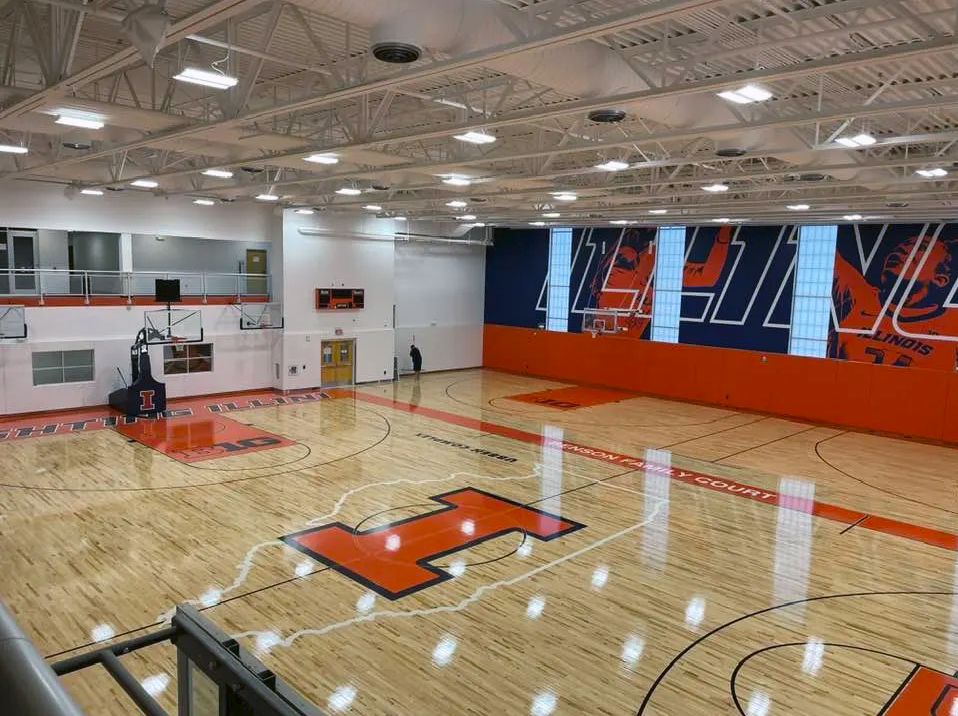
Yes. Sports flooring can become an important part of a school’s athletic identity. Depending on the flooring system, schools can incorporate custom logos, school colors, mascots, court graphics, and game lines for multiple sports.
Customization does more than improve appearance. A professionally designed gym floor can strengthen school pride, create a memorable environment for athletes and spectators, and help showcase the athletic program to prospective students and recruits.
For facilities that host tournaments and regional events, a distinctive court can also create a more professional venue and reinforce the school’s brand in photographs, video, broadcasts, and social media.
When is the best time to replace school gym flooring?
Sports flooring projects should be planned well in advance of the desired completion date. For many schools, summer provides an ideal installation window because athletic schedules and daily student traffic may be reduced.
However, the best timeline depends on the flooring system, facility conditions, and project scope. Hardwood systems, for example, may require time for material acclimation, installation, sanding, finishing, painting, and curing.
Facility managers should begin planning early and coordinate the project with coaches, administrators, maintenance teams, and the flooring contractor. Early planning helps minimize disruption and ensures the facility is ready before practices, games, classes, or tournaments resume.
What should facility managers ask a sports flooring contractor?
A sports flooring contractor should help a school evaluate the entire facility rather than simply recommend a flooring product. Before moving forward with a project, facility managers should ask:
Which flooring system is best suited to our sports and facility usage?
How does the system perform for shock absorption, traction, ball rebound, and vertical deformation?
Can the floor accommodate multiple sports and non-athletic events?
What maintenance will be required each year?
What is the expected lifespan of the flooring system?
What warranty coverage is available?
How long will installation take?
How should the project be scheduled around our athletic calendar?
Can you provide examples of similar installations at schools, colleges, or universities?
What customization options are available for logos, colors, and court markings?
Working with an experienced sports flooring specialist gives facility managers an opportunity to compare systems based on performance, maintenance, installation requirements, and long-term value not simply initial cost.
Plan Sports Flooring Around the Entire Facility
A successful sports flooring project should also consider how athletes and students move throughout the building. The competition court may require hardwood or synthetic sports flooring, while adjacent spaces can have very different needs.
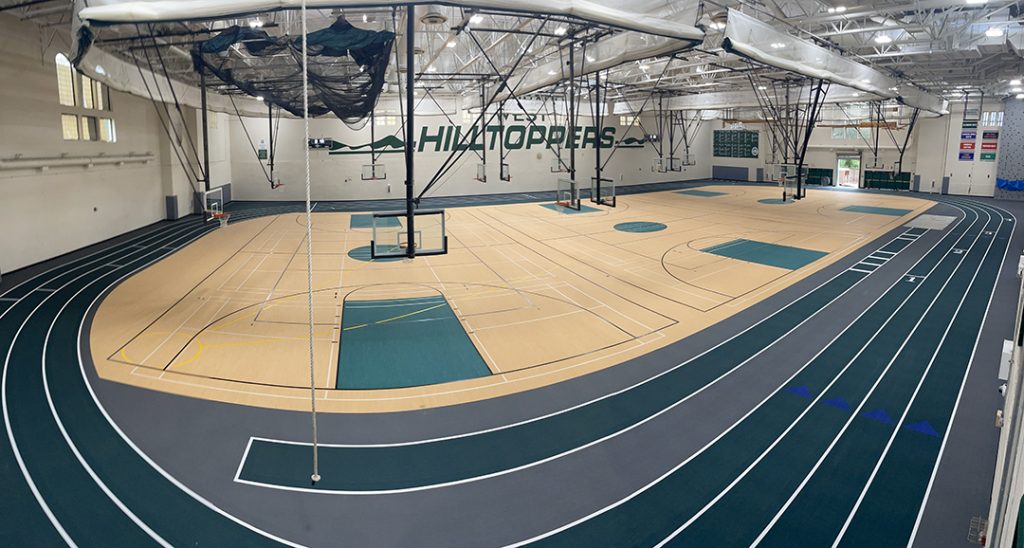
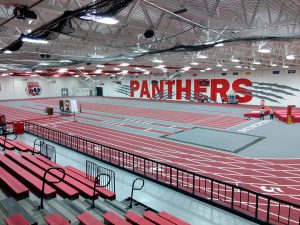
Weight rooms may benefit from durable rubber flooring that helps withstand heavy equipment and repeated impacts. Indoor tracks require surfaces engineered for running and training. Locker rooms, training areas, hallways, and fitness spaces each present their own demands for traction, durability, comfort, and maintenance.
Taking a facility-wide approach helps athletic directors and facility managers select the appropriate surface for each environment while creating a cohesive sports complex that supports athletes, staff, students, and visitors.
Kiefer USA Premium Sports Flooring
Outfit your school with the premium sports flooring that can be found at Kiefer USA. Since we offer Connor, Mondo and Kiefer flooring products, all your sports flooring needs will be met. We’ll design and install your sports floor, whether you choose rubber, synthetic, wood, or turf surfaces.
Kiefer USA has installed high quality floors in colleges and universities, like Missouri Valley College and Northern Illinois University, and high schools, like Niles West High School and North Montgomery High School. We can design and install the best in sports flooring in your facility, too.
While Kiefer USA is a leader in school gym flooring, we also install floors in locker rooms, training rooms, recreation centers, and health clubs. Our extensive reach in the flooring market includes commercial rubber floors in healthcare centers, municipal centers, and industrial settings.
Whether you plan to upgrade your school’s existing sports flooring or aim to build a new one, choose Kiefer USA. Our friendly representatives will guide you through the process from start to finish. When you want a sports floor that elevates your student athletes’ performance, contact Kiefer USA.
Kiefer USA is a leading athletic surface design and sports flooring installation company. Amber Stromberg is a Director of Marketing. 10 Years with Kiefer.
Favorite Hobby: working out and spending time with her kids and family.
It’s essential that sports floors ensure stability, absorb shocks, resist traction, and deliver exuberance – they need to be sturdy, resilient, and safe in order to guarantee optimal performance, withstand heavy traffic and repeated bettering, and safeguard against injuries. Rubber floors meet all these requirements – they’re extremely durable, offer excellent shock absorption and dimensional stability, and create a safe and comfortable environment for athletes and staff alike.
The global sports flooring market is poised for significant growth in 2025, driven by increased health awareness, infrastructure investments, and technological advancements.
Schools are multipurpose spaces, holding not only classrooms, but gymnasiums, cafeterias, offices, and labs. Furthermore, schools are often used before classes begin and after they end to hold community programs. Rubber flooring meets the multiple needs of a school building.