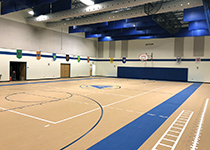
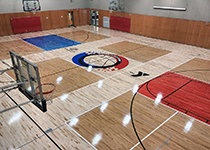
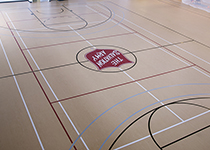
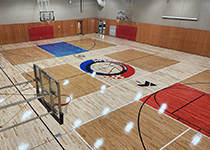
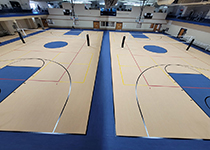
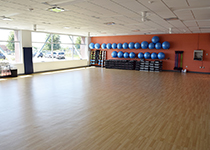
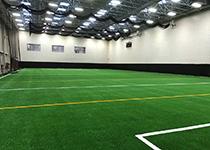
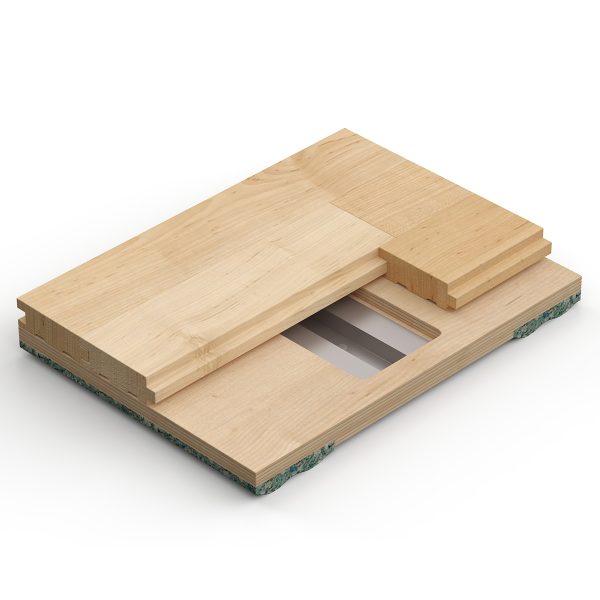
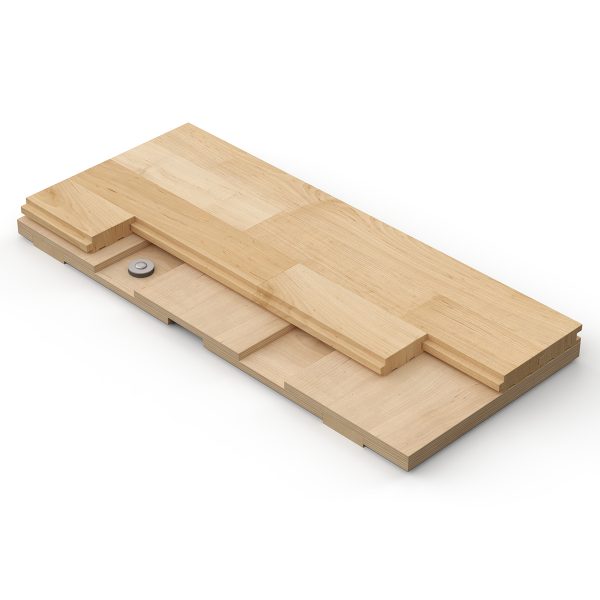
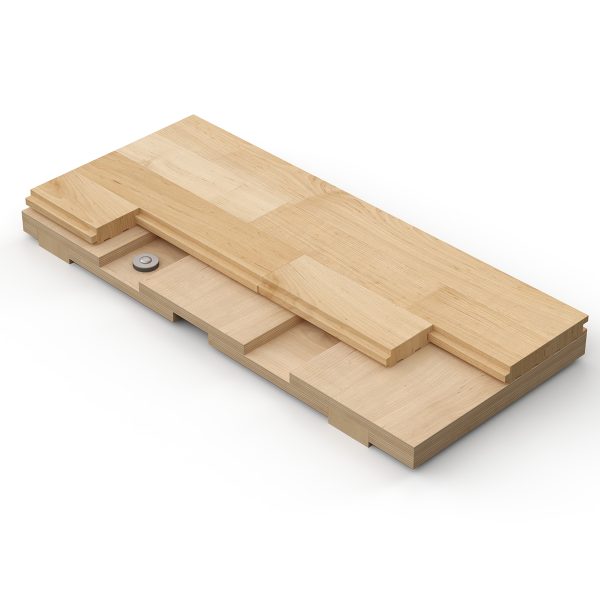
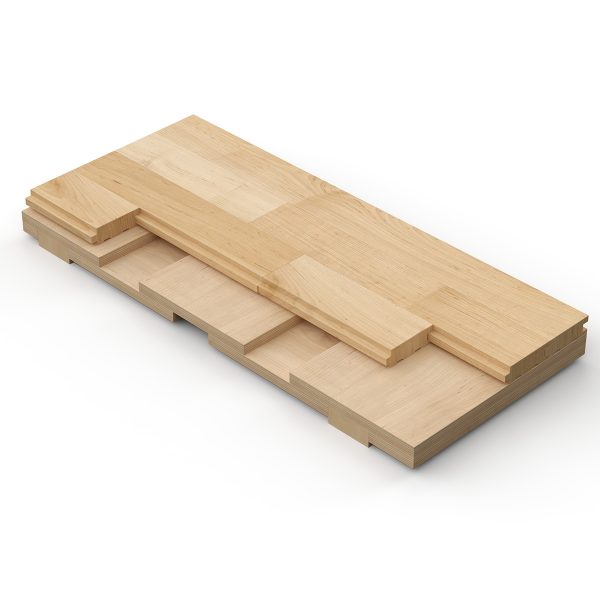
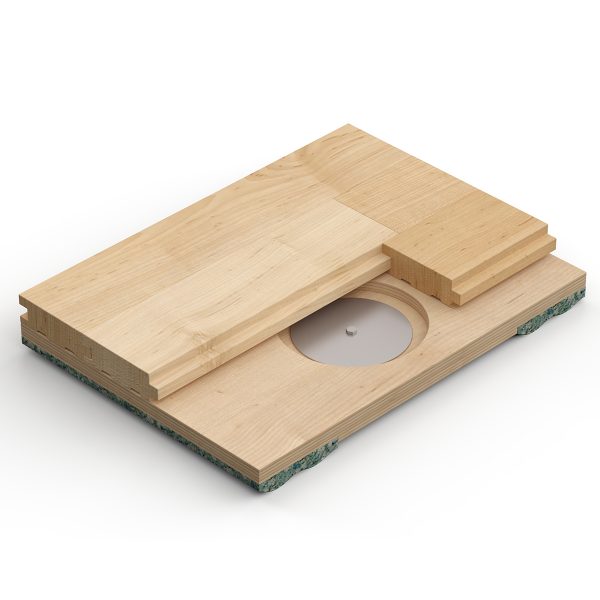
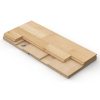
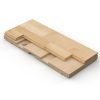
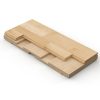
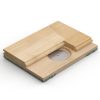
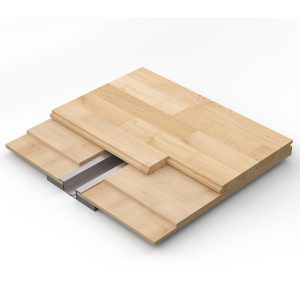
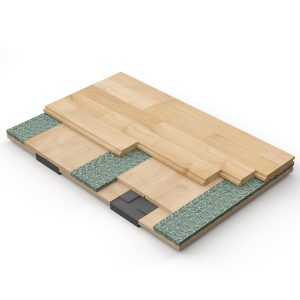
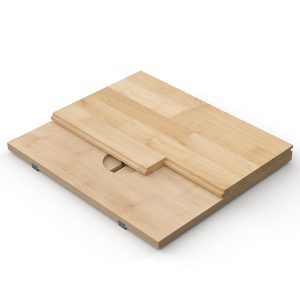
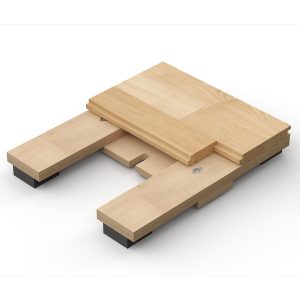
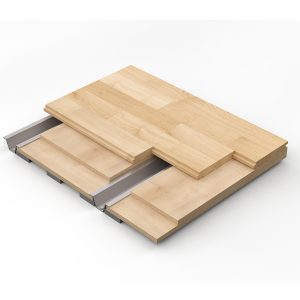
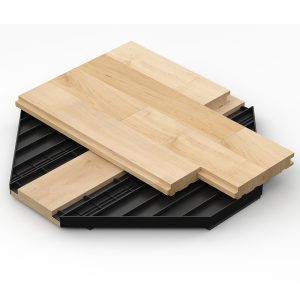
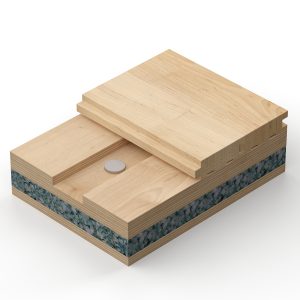
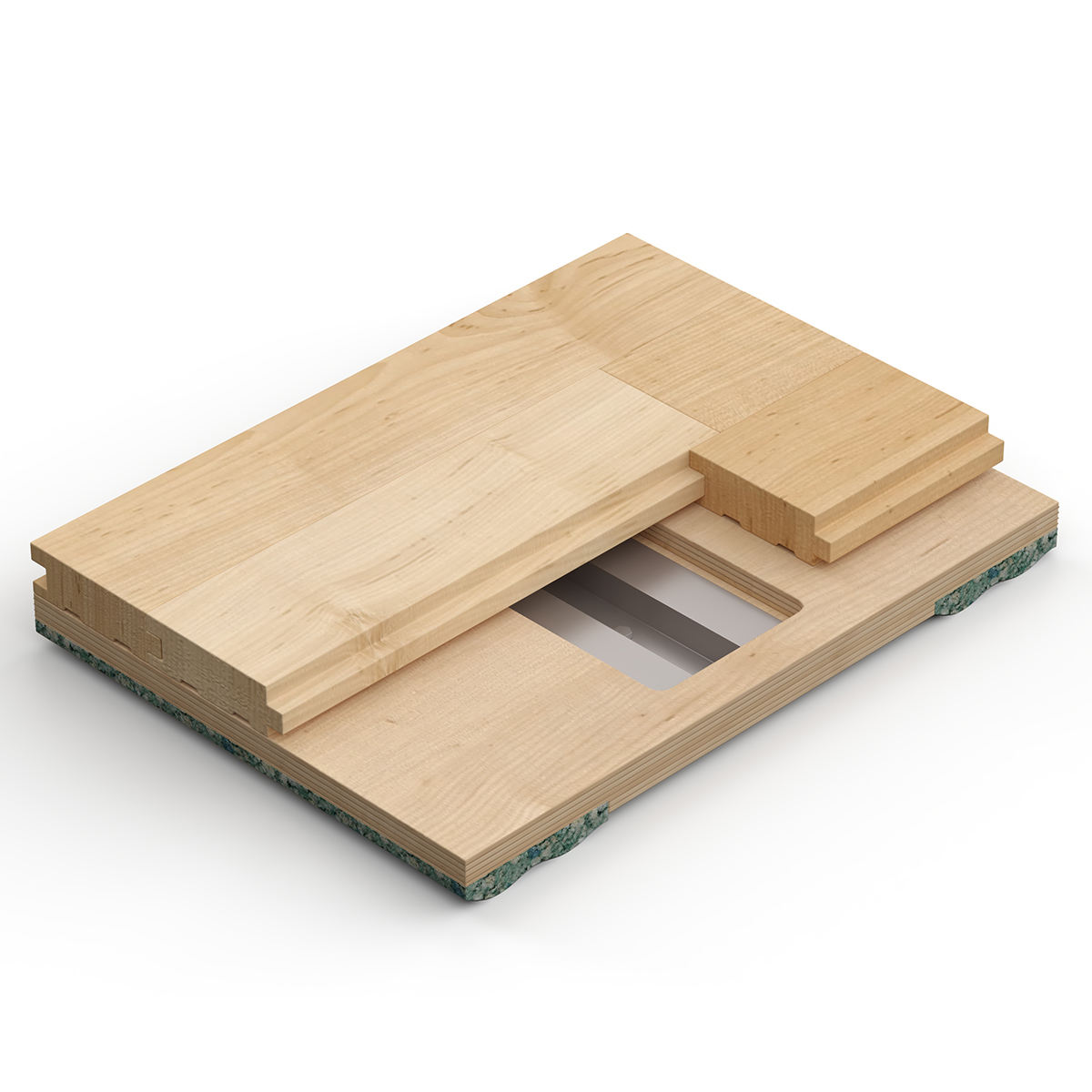
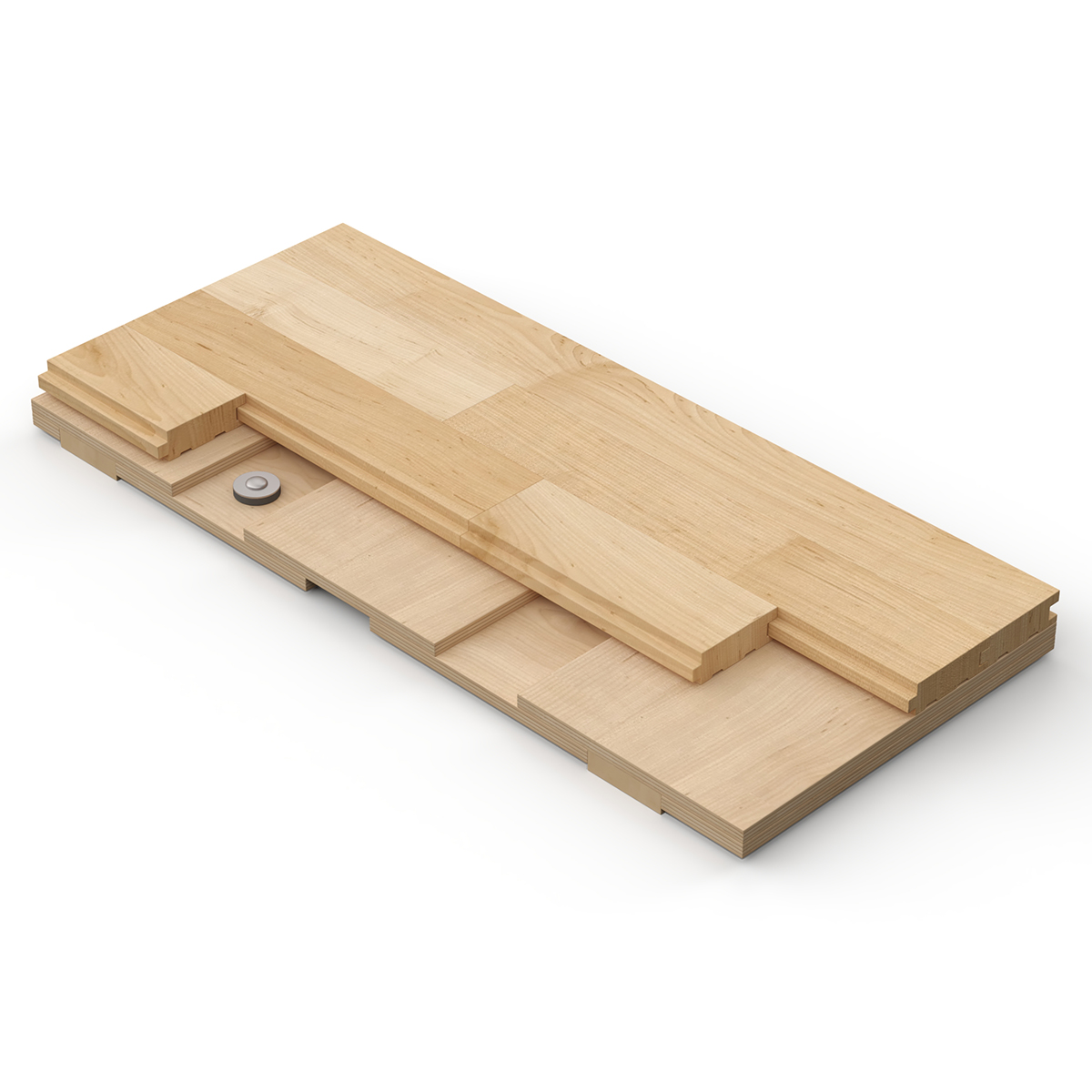
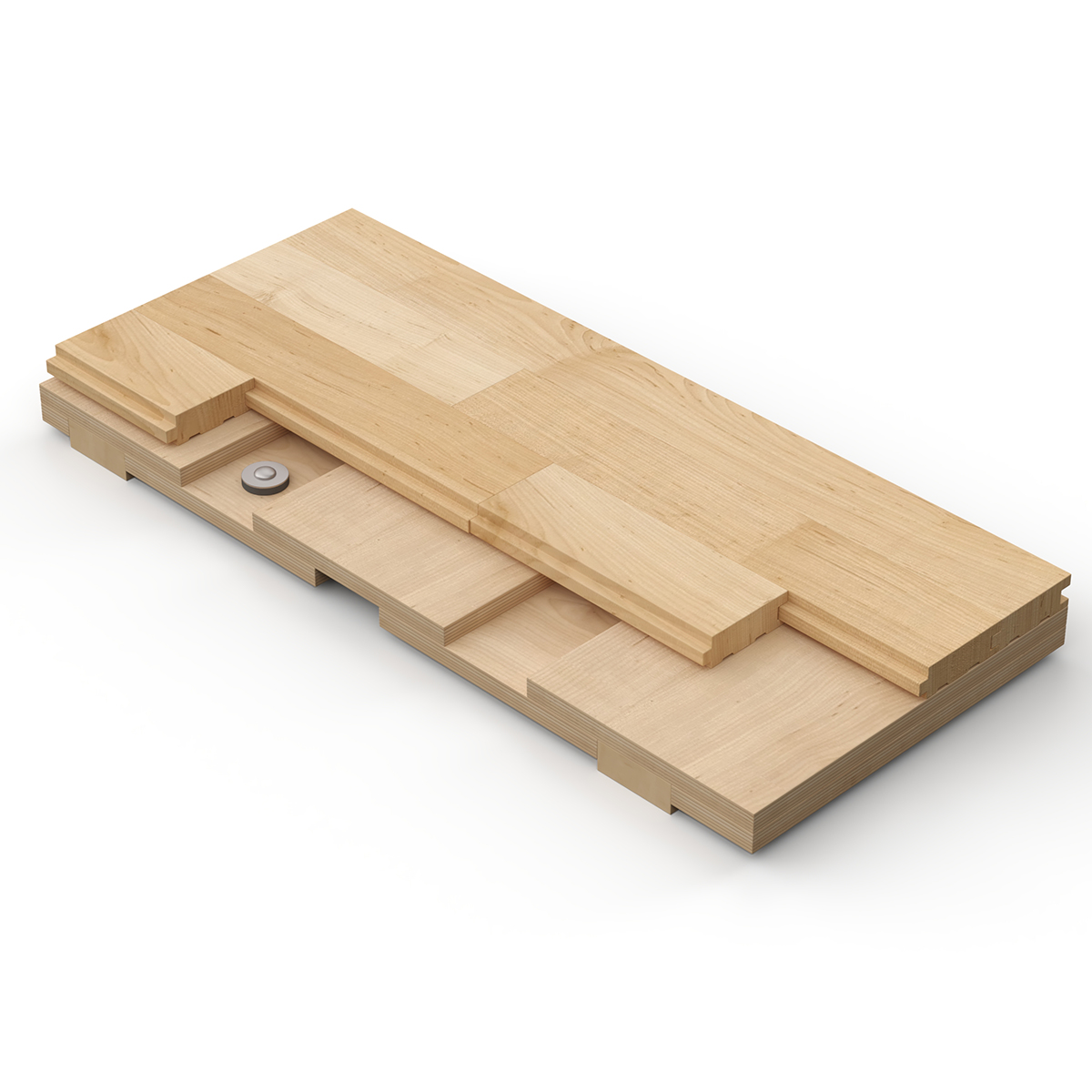
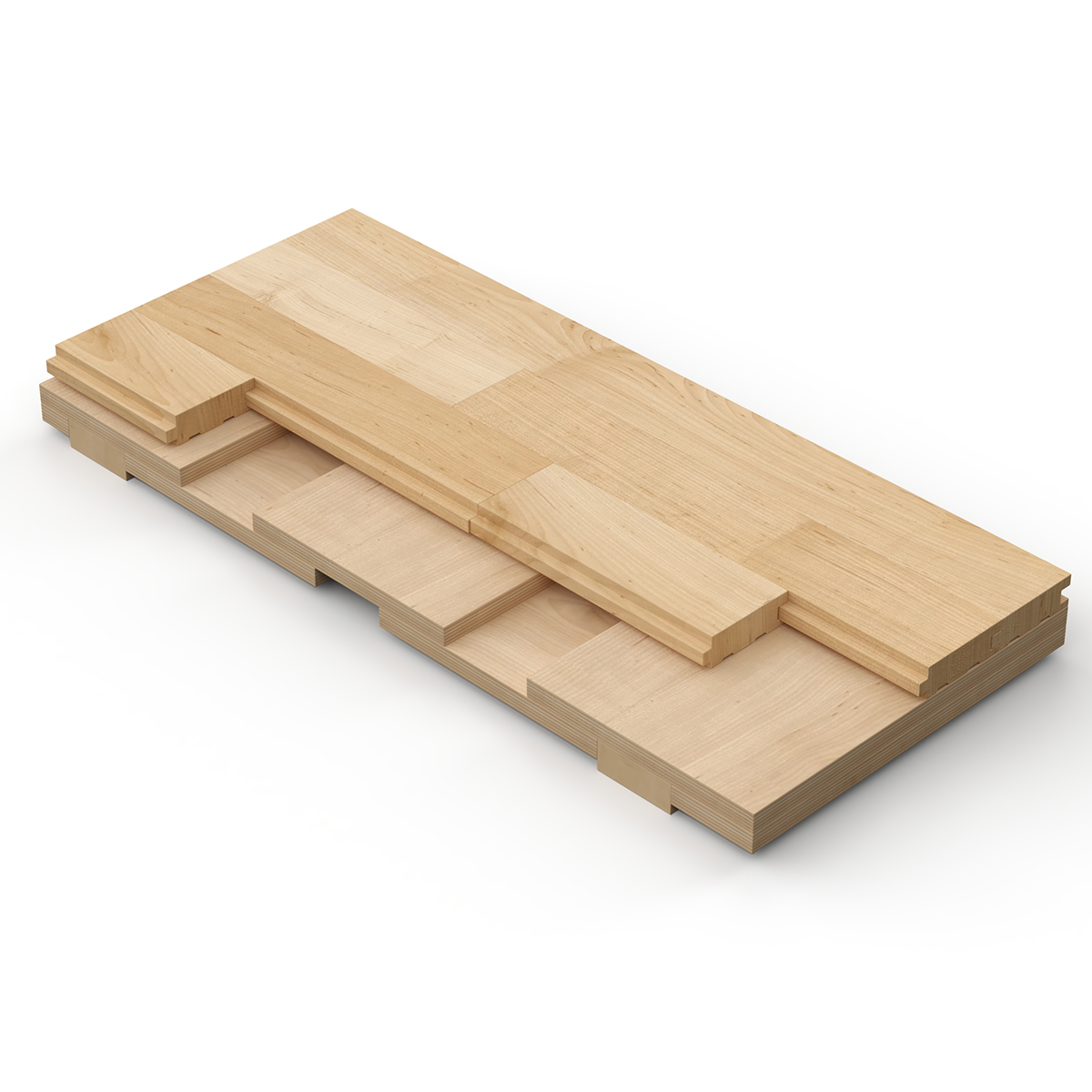
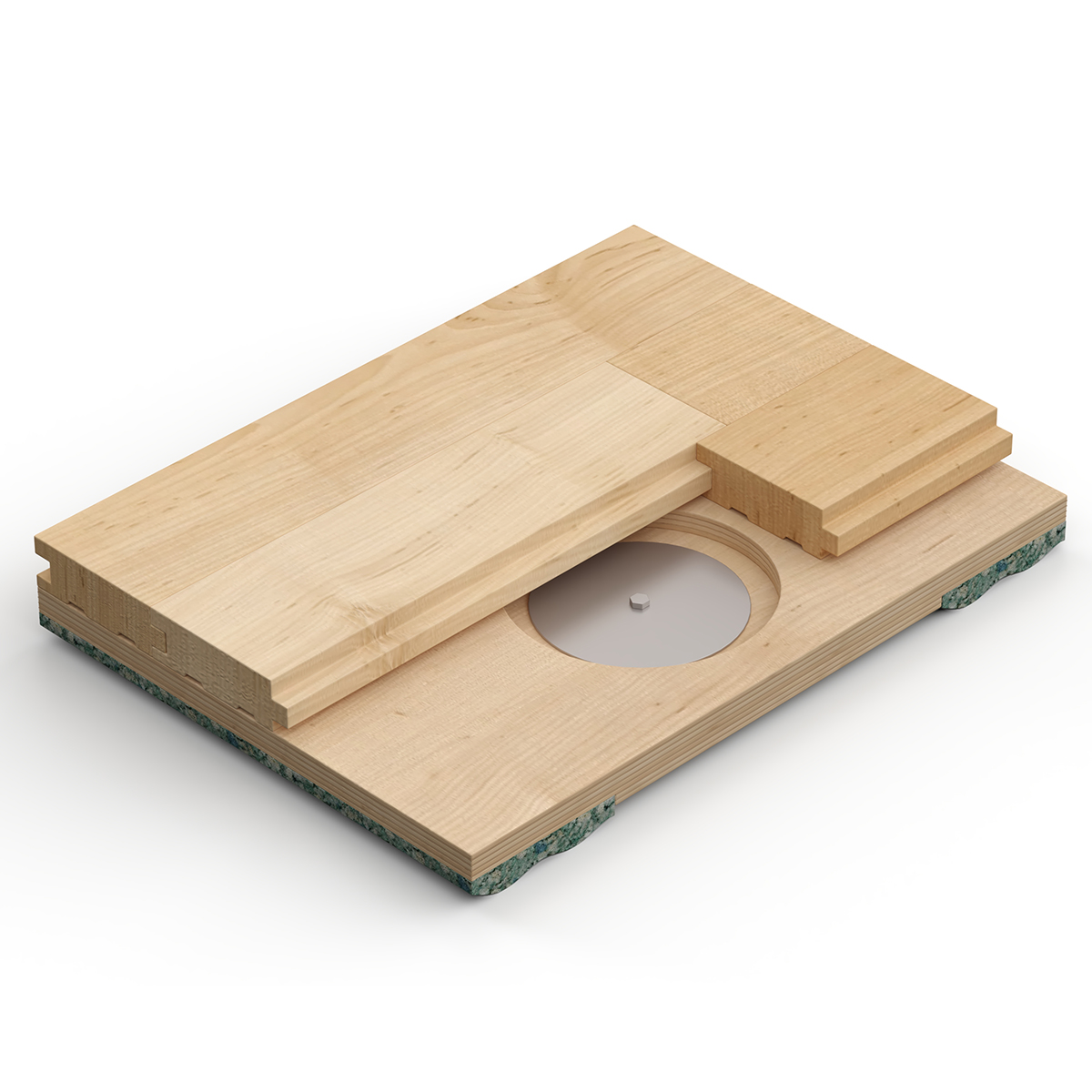
Flexible by Design. RezillBase™ is a configurable hardwood sports-floor platform that allows the subfloor surface, resilient component, anchorage method, and finished profile to be selected around the needs of the facility. The naming structure identifies those choices: the first digit indicates a slotted or full subfloor surface, the second identifies an individual Rezill™ pad or linear Rezill™ cushion, and the third identifies a collared drive pin or sectional-channel anchorage. Floating configurations omit the third digit because no concrete anchorage is used. This modular approach allows owners and designers to balance profile height, resilience, anchorage, support blocking, competitive positioning, and project budget within one system family.
Performance Options. Slotted surfaces create an open-top assembly, while full-surface systems use continuous plywood support. Individual Rezill™ pads provide discrete resilient support, and linear cushioning distributes resilience continuously beneath the subfloor. Anchored versions use either a single collared drive pin or sectional-channel anchorage; the SP-11 system remains floating. Standard-profile systems are shown at 2″, while reduced-profile systems are shown at 1-5/8″ or 1-3/4″, depending on the selected configuration.
System-by-System Differentiation
RezillBase™ SP-11
A 2″ standard-profile floating system with a slotted subfloor surface and 19 mm individual Rezill™ pads. Because SP-11 has no anchorage, the designation contains only two digits. This configuration offers an open-top subfloor and resilient pad support without penetrating the concrete, making it the floating option within the listed RezillBase family.
RezillBase™ SP-111
A 2″ standard-profile anchored system with a slotted subfloor surface, 19 mm individual Rezill™ pads, and a single collared drive pin. SP-111 retains the open-top construction of SP-11 while adding positive concrete anchorage. The result is a standard-height system that combines individual pad resilience with anchored stability.
RezillBase™ RP-111
A 1-5/8″ reduced-profile anchored system with a slotted subfloor surface, 14 mm individual Rezill™ pads, and a single collared drive pin. RP-111 delivers the lowest listed RezillBase profile while preserving an open-top resilient design and direct anchorage. It is suited to projects where available slab depression or transition height is limited but individual-pad resilience and anchored support are still desired.
RezillBase™ RP-221
A 1-3/4″ reduced-profile anchored system with a full subfloor surface, 10 mm linear Rezill™ cushioning, and a single collared drive pin. The continuous plywood surface provides full support, while the linear cushion distributes resilience beneath the assembly. RP-221 differentiates itself from RP-111 through its full-top construction and linear cushioning, while retaining single-point anchorage.
RezillBase™ RP-222
A 1-3/4″ reduced-profile anchored system with a full subfloor surface, 10 mm linear Rezill™ cushioning, and sectional-channel anchorage. It shares the full-top and linear-cushion construction of RP-221 but replaces the single collared drive pin with a channel anchoring approach. This makes RP-222 the channel-anchored reduced-profile option within the five configurations shown.
Quick Comparison
| System |
Profile |
Subfloor Surface |
Resilience |
Anchorage |
| SP-11 |
2″ |
Slotted / open top |
19 mm individual Rezill™ pads |
Floating |
| SP-111 |
2″ |
Slotted / open top |
19 mm individual Rezill™ pads |
Single collared drive pin |
| RP-111 |
1-5/8″ |
Slotted / open top |
14 mm individual Rezill™ pads |
Single collared drive pin |
| RP-221 |
1-3/4″ |
Full surface |
10 mm linear cushion |
Single collared drive pin |
| RP-222 |
1-3/4″ |
Full surface |
10 mm linear cushion |
Sectional channel |
Profile and thickness note: The profiles above are the representative configurations shown in the RezillBase introduction presentation. The presentation notes that examples are representative only and identifies standard-profile systems at 2″ and reduced-profile systems at 1-5/8″ or 1-3/4″. Final elevation can vary with the specified maple, plywood, resilient component, blocking, anchorage, and project conditions, so the selected assembly should be confirmed before publication in project-specific documents.